Build a third-party logistics application
Use this roadmap when your third-party logistics (3PL) application quotes, accepts, and fulfills delivery jobs for Otter. A certification-ready 3PL flow supports quoting, delivery creation, live updates, update requests, cancellation, errors, and both successful and canceled terminal states.
Quote support is part of this baseline. Confirm the final requirements for your product with your Otter representative before you submit for certification.
Before you begin
- Complete the shared readiness baseline.
- Configure signed delivery webhooks for your application.
- Define how your delivery ids map to Otter delivery reference ids.
- Map your courier lifecycle to
ALLOCATED,PICKED_UP,COMPLETED, andCANCELED. - Define quote expiration, service-level, currency, and estimate behavior.
How it fits
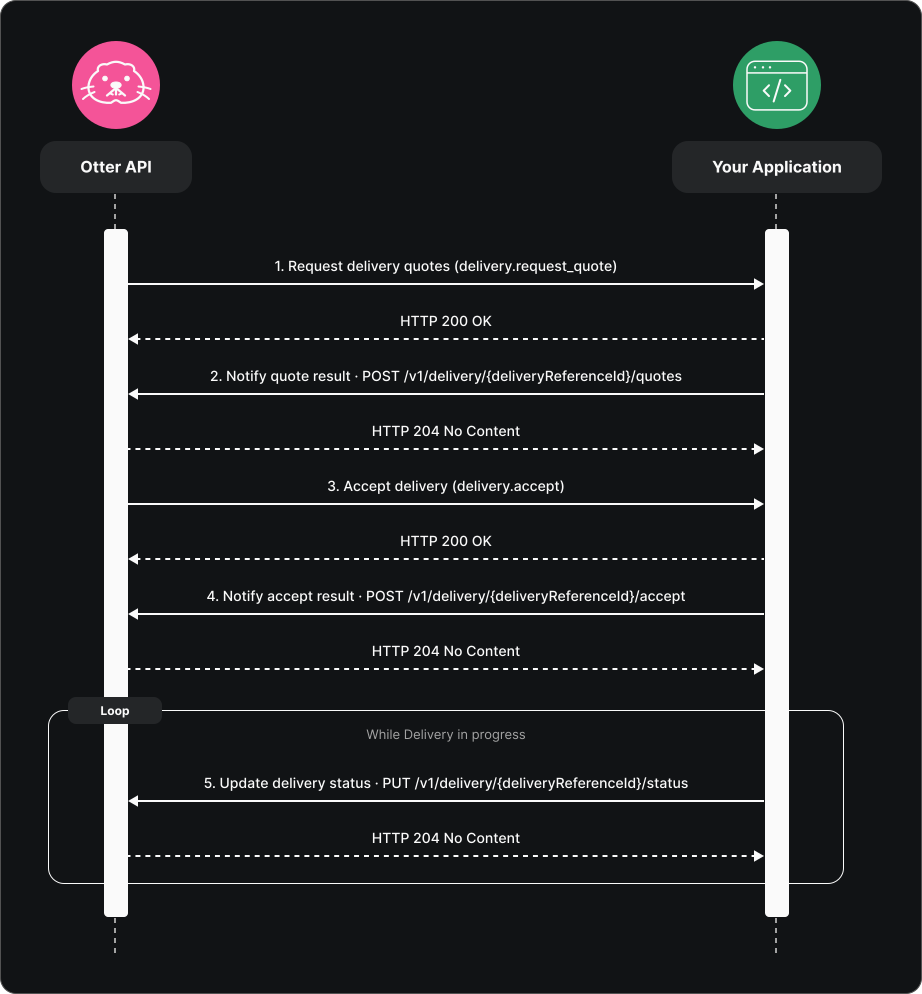
Quote and delivery creation
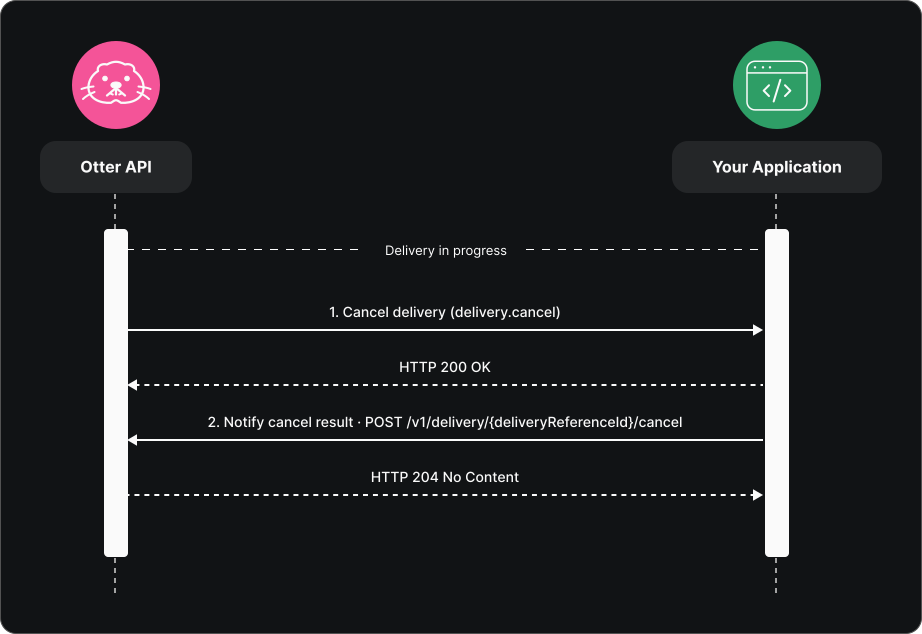
Delivery updates and cancellation
Implementation roadmap
1. Quote every supported delivery
Handle Request delivery quotes (delivery.request_quote). Return available options through POST /v1/delivery/{deliveryReferenceId}/quotes, including stable quote ids and valid estimates.
Make repeated quote requests safe and return explicit errors when your service cannot quote the delivery.
2. Accept and allocate the delivery
Handle Accept delivery (delivery.accept). Reserve the selected service in your system, then call POST /v1/delivery/{deliveryReferenceId}/accept with committed estimates and status ALLOCATED.
Follow Create a delivery for the complete sequence.
3. Publish live updates
Call PUT /v1/delivery/{deliveryReferenceId}/status whenever status, address, courier, vehicle, notes, or estimates change. Keep updates ordered and continue until the delivery reaches COMPLETED or CANCELED.
4. Handle update requests
Process Update delivery request (delivery.update_request), apply supported changes, and reply through POST /v1/delivery/{deliveryReferenceId}/update. See Handle delivery update requests.
5. Handle cancellation
Process Cancel delivery (delivery.cancel), stop the job when allowed, and reply through POST /v1/delivery/{deliveryReferenceId}/cancel. See Cancel a delivery.
6. Report failures
When a webhook-triggered operation cannot complete, call POST /v1/delivery/callback/error with the matching delivery reference and actionable details. Follow Handle delivery errors.
Readiness checklist
- Quote requests return valid options, estimates, prices, currencies, and stable quote ids.
- Repeated quote and accept events do not create duplicate reservations or delivery jobs.
- Accepted deliveries enter
ALLOCATEDwith committed pickup and drop-off estimates. - Status updates preserve the delivery reference and follow a valid lifecycle.
- Courier, vehicle, address, notes, and estimate updates reach the correct delivery.
- Update requests return a success callback or an explicit error callback.
- Cancellation succeeds before completion and leaves both systems in
CANCELED. - Successful delivery reaches
COMPLETEDin both systems. - Webhook signatures, duplicate delivery, rate limits, and retryable API failures are handled.
Test before certification
- Receive a quote request and return at least one valid option.
- Replay the quote request and verify that the result remains safe and traceable.
- Accept a selected quote and verify that only one delivery job is allocated.
- Move the delivery through
ALLOCATED,PICKED_UP, andCOMPLETED, including courier and estimate updates. - Create a second delivery, apply an update request, then cancel it before completion.
- Trigger one unsupported or invalid operation and verify that the error callback identifies the correct delivery.
- Replay an accept, update, and cancel event and verify that no duplicate action occurs.
Evidence to collect
- Delivery reference ids, quote ids, and provider delivery ids for every tested flow.
- Quote and accept webhook ids with their callback responses.
- Ordered status-update evidence for successful and canceled lifecycles.
- Before-and-after evidence for one delivery update request.
- Error callback evidence for one expected failure.
- Signature-validation, duplicate-delivery, retry, and terminal-state logs.
- The shared evidence listed in Scenarios.
Common failures
| Symptom | Likely cause | Fix |
|---|---|---|
| Quote cannot be selected | Quote id expired, changed, or cannot be resolved | Keep quote ids stable for their advertised validity window |
| Duplicate courier job appears | Accept event was processed more than once | Deduplicate by delivery reference and selected quote before reserving a courier |
| Update targets the wrong job | Provider id is used without the Otter delivery reference mapping | Persist and use both identifiers on every callback and update |
Delivery remains in ALLOCATED | Status publisher stopped or updates were rejected | Retry transient failures and monitor for stale non-terminal deliveries |
| Cancellation and completion race | Terminal transitions are not serialized | Apply one terminal state and treat later terminal events idempotently |